


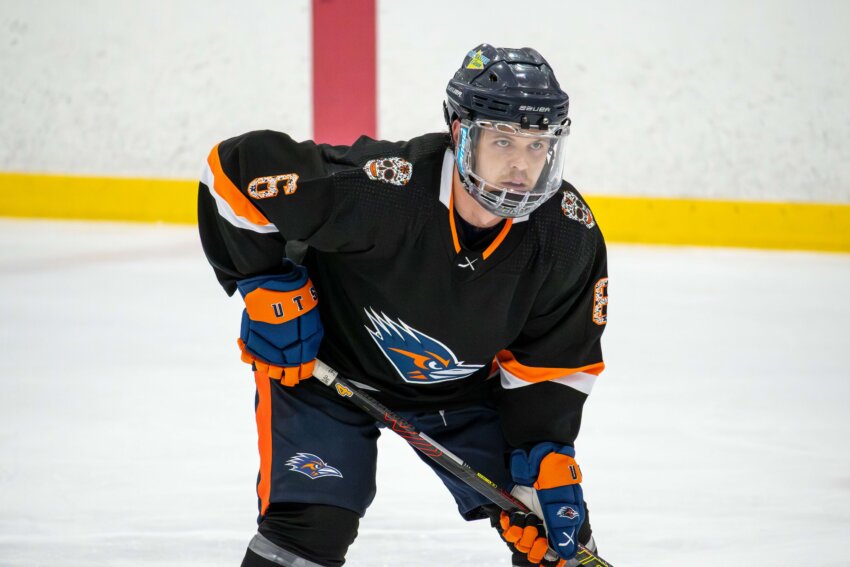
When Jordan Nolan, DMD, joined the hockey team at The University of Texas at San Antonio, the only condition he had was that residency would always come first.
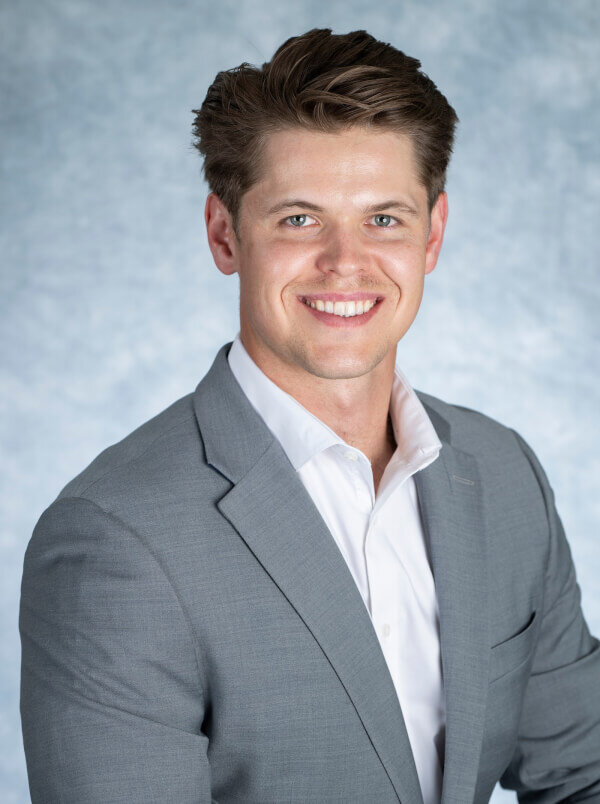
“I told the team I wouldn’t be able to make practices because my residency obligations come first,” Nolan said. “And they said, ‘No worries, we can work with that.’”
As a first-year pediatric dentistry resident at the School of Dentistry, the arrangement offered Nolan the unexpected chance to continue competing in the sport that had influenced much of his life while pursuing one of the most demanding forms of professional training.
It also reflected something larger emerging at UT San Antonio.
Through the integration of The University of Texas Health Science Center at San Antonio and The University of Texas at San Antonio, health professional students now have expanded access to student organizations, campus experiences and athletics — opportunities that were not previously available to many learners whose education existed largely separate from a traditional, academic campus life.
For Nolan specifically, that meant returning to the ice as a defenseman.
For students in the health professional programs, it represents a broader shift in what student life can look like while training for careers in health care.
More than one identity
Growing up in Arizona, hockey was central to Nolan’s identity long before dentistry entered the picture.
“The sport was my whole life growing up,” he said.
After high school, he spent a year playing junior hockey in New Jersey before earning a biology degree from Northern Arizona University, where he continued competing as a student-athlete. He eventually moved on to dental school at the Arizona School of Dentistry and Oral Health, assuming his years of competitive hockey were behind him.
Then he arrived in San Antonio.
After matching into the pediatric dentistry residency program at UT Health San Antonio, the academic health center of UT San Antonio, Nolan learned through an integration update email that he would now be eligible to participate in UTSA Athletics. Days later, while playing recreational hockey at a local rink, he happened to skate alongside a coach for UTSA Hockey.
A casual conversation with the coach quickly turned into an invitation to join the team. The timing felt almost improbable, but the opportunity mattered for Nolan.
Health professions education often demands extraordinary focus and long hours. Residency schedules can leave little room for outside interests, let alone competitive athletics. Continuing to play hockey offered a sense of continuity during an intense season of professional growth.
“This residency comes first,” Nolan said. “But being able to still play has been really meaningful.”
Lessons from the rink
The connection between athletics and patient care may not seem obvious at first glance, but Nolan sees overlap everywhere.
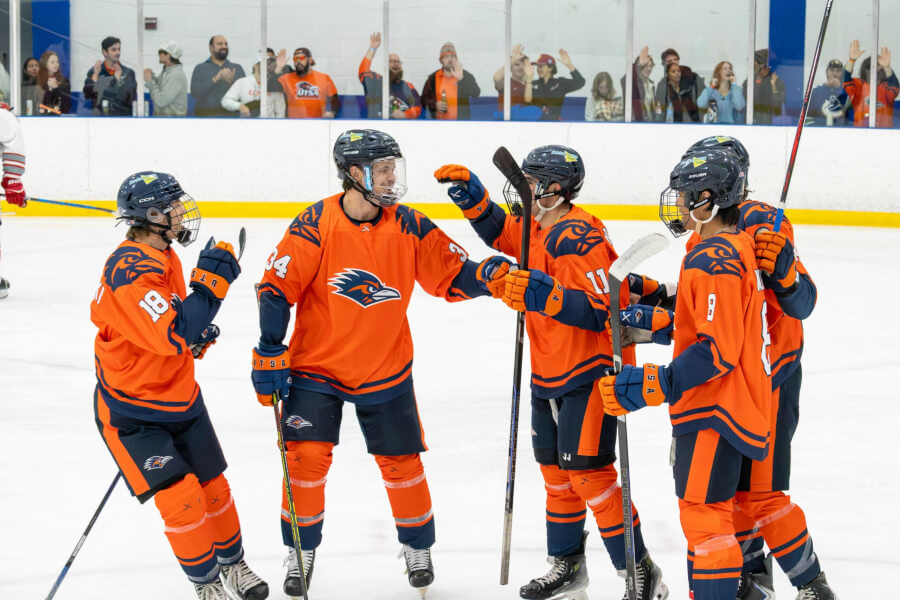
Years of hockey taught him how to work within a team, adapt under pressure and continue pushing toward long-term goals, lessons that now outline his approach to residency training.
“You learn how to work together and pick each other up when you need to,” he said. “It’s very similar in a dentistry practice.”
That perspective has been especially important in pediatric dentistry, where collaboration extends to include young patients and their families.
Nolan’s interest in the specialty first developed through his older brother, a pediatric dentist who invited Nolan and his twin brother to shadow at his office during their undergraduate years.
“We realized how different dentistry was from what we initially thought, and how awesome it could be,” Nolan said.
What stood out most was the connection his brother had built with families over time. Nolan also discovered he genuinely enjoyed working with children, something reinforced through summers spent helping with youth hockey camps.
“I always found I was most excited to work with the pediatric population,” he said. “It felt purposeful.”
Training for the real world
Now training at UT Dentistry, the School of Dentistry’s dental practice, community clinics and CHRISTUS Children’s, Nolan is gaining exposure to complex cases referred from dentists across the region, experiences he believes are preparing him for the realities of specialty practice.
“It feels like the best of both worlds,” he said of the program’s combination of community dentistry and hospital training. “You see conditions you typically wouldn’t see in private practice, and that prepares you for the real world.”
The work can be challenging. Pediatric dentistry requires clinical skill, extreme patience, thoughtful communication and the passion to help families navigate difficult situations.
Still, Nolan says the relationships formed along the way make the work worthwhile.
Holding onto what matters
Nolan’s journey from hockey rinks to pediatric dental clinics may not follow a predictable path, but that is precisely what makes it resonate.
His experience reveals that academic achievement and professional milestones alone don’t sum up student success. Creating environments where students can continue developing as whole people, bringing their passions, identities and experiences with them into the professions they choose is essential to success.
That has meant Nolan can pursue a career he believes in without completely leaving behind the sport that he loves.
“I feel confident in the path I’ve taken,” he said. “I’ve been able to pursue something I genuinely care about while still holding onto a big part of who I am.”